
Site #21 The Palisades from Yonkers Waterfront
Introduction by 2016 Cole Fellow Casey Monroe
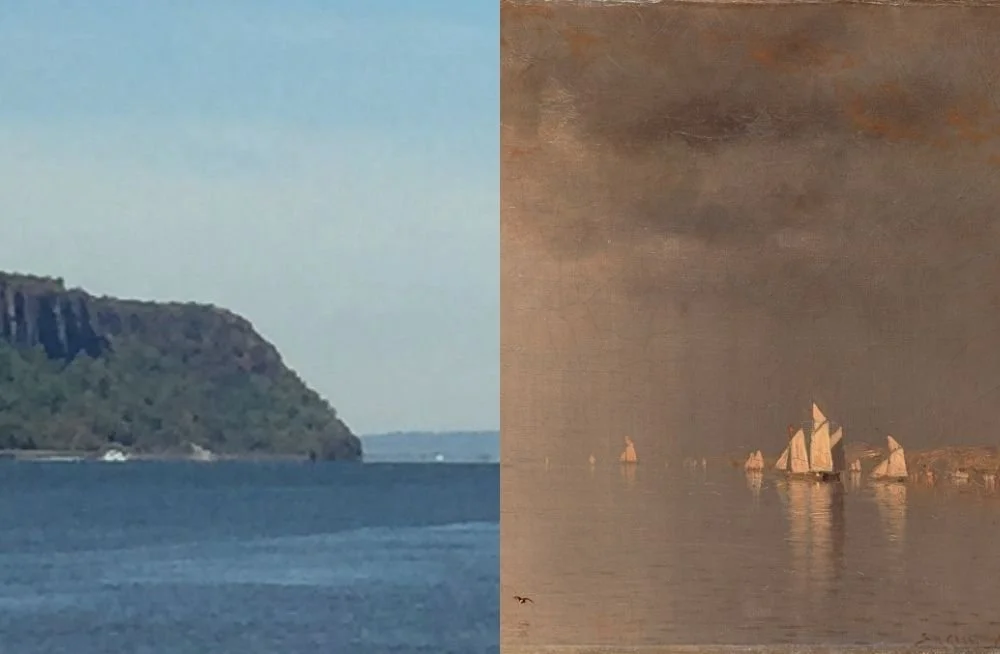
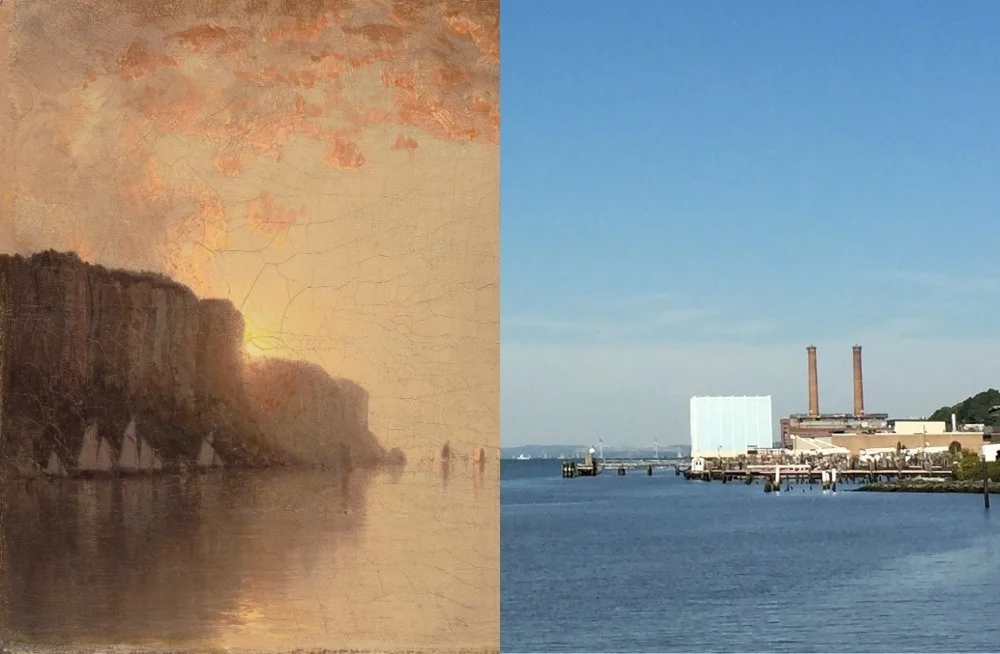
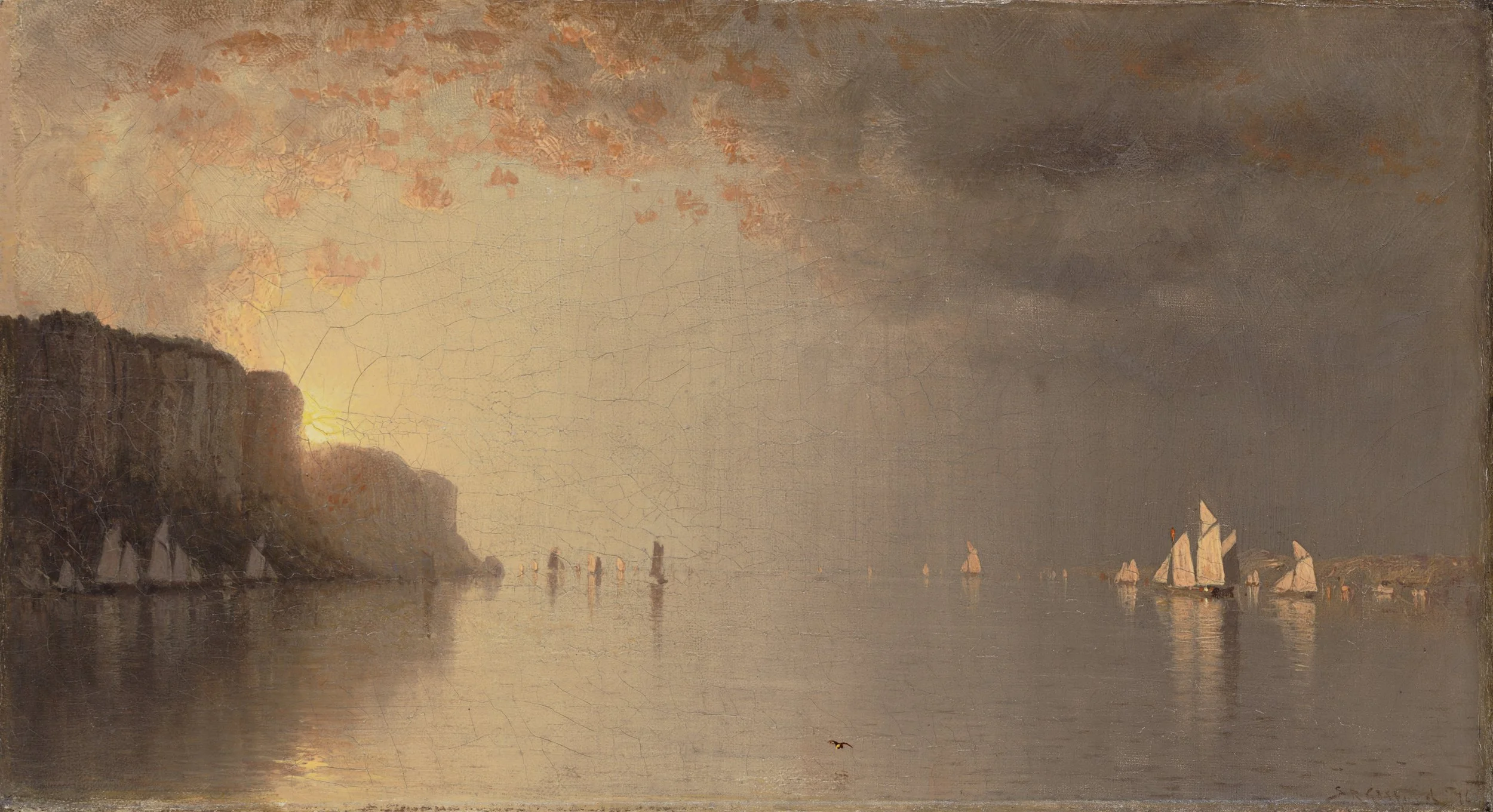
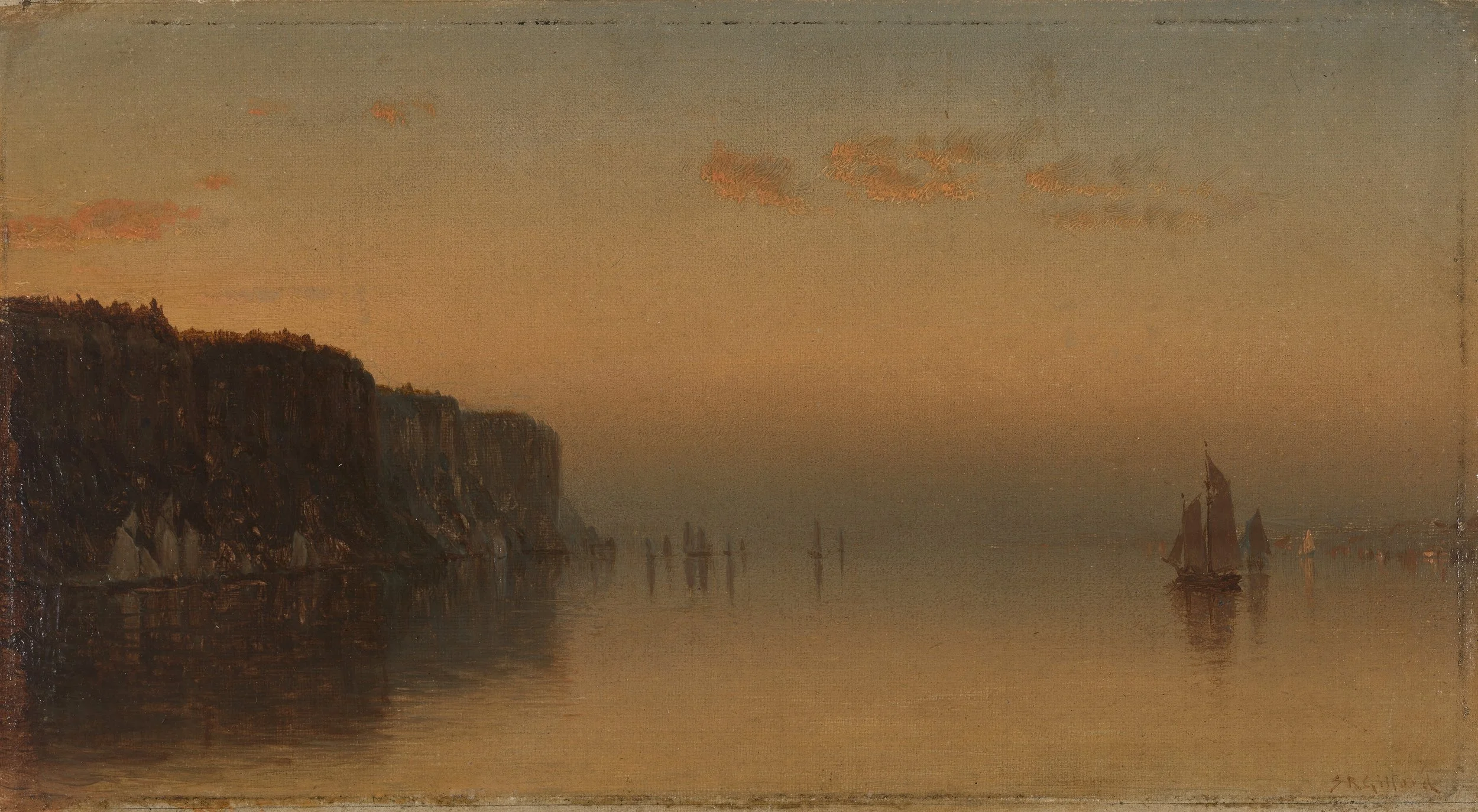
Towering above the Hudson River for twenty miles along its western shore and reaching heights of over five-hundred feet, the New Jersey Palisades are an enduring presence in American cultural and environmental history. Referred to as the “rocks that look like rows of trees” by local branches of the Lenape, the Palisades and their sublime beauty have been rendered in pen and brush alike. Renowned nineteenth-century poet William Cullen Bryant mused that, among the Palisades, “one may…see the most glorious sunsets that ever changed the sky to gold and fire.” As if taking a cue from Bryant himself, American landscape painter Sanford Gifford captured a strikingly similar view in his 1877 painting, The Palisades (seen here).
Celebrated for his radiant depictions of New York’s natural scenery, Gifford was a member of the informal movement of 19th-century American landscape painting known to many as the Hudson River School. Alongside such loosely-knit artists as Thomas Cole, Frederic Church, Asher Durand, and Albert Bierstadt, Gifford composed aspirational views of the United States that at once idealized the landscape and promoted its conservation. In The Palisades, Gifford conveys the pristine monumentality of the titular bluffs amid the diaphanous glow of a hazy, golden-red sunset. Interspersed below, sailboats glide smoothly along the Hudson’s calm surface, which reflects their shadowed masts against a luminous twilight sky. Robust and everlasting as the Palisades may appear, however, their existence was once threatened by extractive human development.
Throughout the 19th century, these impressive cliffs were quarried for railroad ballast and trap-rock for docks—that is, until the New Jersey State Federation of Women’s Clubs intervened in the 1890s to preserve them from certain obliteration. Buttressed with the financial support of J. P. Morgan and the political backing of Theodore Roosevelt, their concerted efforts brought about the creation of the Palisades Park Commission in 1900, which quickly began purchasing land from quarry companies. Significantly expanded with a generous donation of 2,500 acres by John D. Rockefeller, the Palisades Interstate Park would later be designated as a National Historic Landmark in 1965 by the US Department of the Interior and National Park Service, forever protecting these iconic cliffs from commercial destruction.
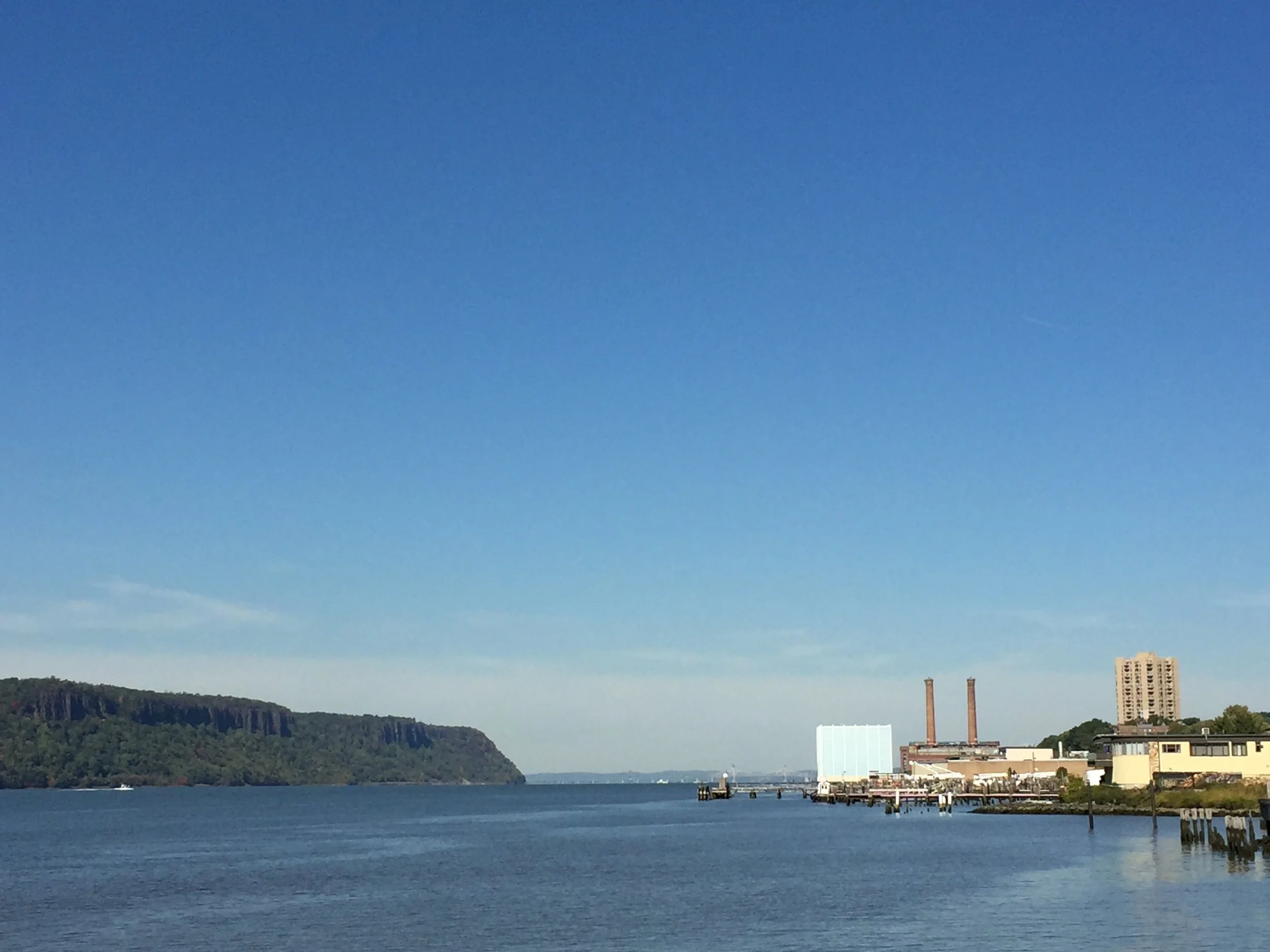
Were it not for the heroic efforts of the New Jersey State Federation of Women’s Clubs and their titanic supporters, we would not be able to view the Palisades as Gifford delicately depicted them in 1877. While the keen observer will notice that numerous markers of human civilization have since encroached upon this view, the cliffs themselves stand steadfast as a symbol of this country’s wild beauty and the historic endeavors taken to protect it. As efforts to safeguard the Palisades and their views have continued into the 21st century, we must remember that the fight to conserve our natural treasures for future generations never truly ends.
Map & Directions
Driving Directions: We recommend Google Map. Site coordinates: 40°56'04.4"N, 73°54'12.7"W
Location Notes: The Palisades are viewable from the Yonkers Esplanade Waterfront Park, as well as nearby Dock Street.
Plan Your Trip
Contact
Visit their Website
914-377-6000
Admissions
Free
Parking
Yes
Restroom
No
Accessibility
Generally Accessible
Meets most ADA standards and has few barriers. Some visitors with disabilities may need some assistance
Hours
Open all seasons
Photography / Painting Credits
Sanford R. Gifford, Sunset on the Hudson, 1876, oil on canvas, 9 x 15 15/16 in., Wadsworth Atheneum Museum of Art, Hartford, CT, The Ella Gallup Sumner and Mary Catlin Sumner Collection Fund, 1958.151
Casey Monroe. The Palisades from Yonkers Waterfront. Photograph.
Sanford R. Gifford, The Palisades, 1877, oil on canvas, 5 15/16 x 11 1/2 in., Williams College Museum of Art, Gift of Dr. and Mrs. Gifford Lloyd, 78.24.2